
Start with a real win condition
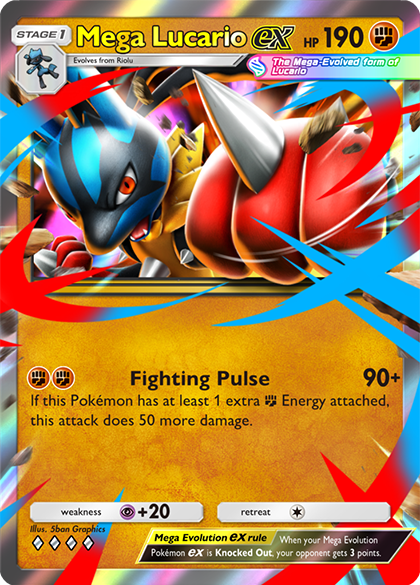
Every strong deck can explain how it wins in one clean sentence. Mega Lucario EX wants to convert early setup into decisive knockouts. Suicune EX Baxcalibur wants to stabilize, deny clean trades, and win through efficient sequencing over time. If you cannot describe your list's plan that simply, you probably built around powerful cards instead of around a game plan.
This step matters because deckbuilding problems often start before ratios are even discussed. Players add a flashy attacker, then another, then a clever tech, and only later notice the list has no clear first three turns. A deck should know what it is trying to do when it goes first, when it goes second, and what it wants its board to look like by the mid game.
Before adding anything optional, write down your core. Which attackers are mandatory? Which evolution pieces make them function? Which support cards let those pieces appear on time? That foundation should define the rest of the build.
Consistency beats ceiling more often than players expect
Newer builders often fall in love with maximum power. They imagine the deck's best draw and build around that fantasy. Stronger builders begin with the average draw. They ask whether the deck still plays meaningful Pokémon, attaches energy correctly, and sees enough setup cards even when the opening hand is just decent. In ranked, the average game matters more than the dream game.
That is why consistency slots matter so much. Draw supporters, search pieces, and flexible support cards do not always look exciting in a deck list screenshot, but they are the difference between a powerful idea and an actual ladder deck. If your list keeps bricking, the answer is rarely 'add another attacker.' It is usually 'remove a luxury card and improve the deck's ability to play turn one and turn two cleanly.'
A practical rule is to cut the coolest unnecessary card before you cut consistency. If the deck only feels strong when everything lines up perfectly, it is not built well enough yet.
How to choose ratios and tech slots
Ratios are not random. They reflect how urgently you need to see certain cards and how badly your plan suffers when you do not. A key evolution line or essential support piece often deserves duplication because your deck collapses without it. A matchup-specific answer card might be excellent, but if it only matters in one narrow field, it may belong as a one-of or even outside the list entirely until the meta justifies it.
Tech cards are most useful when you already understand your deck's stable version. Players often add techs too early because they want to 'cover everything.' In practice, that creates a list that covers everything badly. Start with the clean, consistent core. After a sample of ranked games, identify the exact matchup or board state causing problems. Then add one answer and test whether it improves enough games to earn the slot.
For example, if your list handles most of ladder but repeatedly loses a specific prize race to a top deck from the [Meta Tier List](/guides/meta-tier-list-explained), a targeted tech might be warranted. If your losses come from general clunkiness, no tech card will save you.
Deck recommendations and real build examples
Looking at existing successful decks helps because it teaches what a coherent shell looks like. [Miraidon EX Magnezone](/decks/miraidon-ex-magnezone) shows how a deck can commit heavily to setup and still maintain pressure. [Mega Altaria EX Darkrai](/decks/mega-altaria-ex-darkrai) is useful for studying synergy and payoff, while [Mega Lucario EX](/decks/mega-lucario-ex) demonstrates how a proactive game plan can remain accessible to improving players.
When copying a list, do not ask 'which card can I replace with my favorite?' Ask 'which cards are the engine, which are flex slots, and which are meta calls?' That mindset turns netdecking into learning instead of imitation. Once you know which eight to ten cards make the deck function, your edits become much more intelligent.
If you are early in your account, stay close to proven shells. Innovation is easier once you have matchup reps and understand what your changes are costing in consistency.
Beginner tips and advanced testing habits
Beginner tip: goldfish your first few turns before you queue. Draw sample hands and ask whether the deck does something coherent by turn two. Beginner tip: count how many cards in your list are dead when drawn early. Too many dead cards usually means you are being too greedy. Beginner tip: track which cards sit in hand unplayed across multiple matches. Those are prime cut candidates.
Advanced players improve decks by changing one variable at a time. Play a block of matches, identify a repeated problem, make one swap, and test again. This sounds slow, but it is how you learn what the deck actually needs. Changing five cards after every loss may feel productive, yet it hides what is really helping or hurting the list.
Review your deck after wins too. A bad card can hide inside a winning streak if your openings were strong enough to cover it. Honest testing means noticing clunky cards even in matches you still won.
Common deckbuilding mistakes
The first mistake is playing too many attackers and not enough setup. The second is overreacting to a single matchup by warping the entire deck around it. The third is refusing to cut pet cards. Many players would rather blame bad luck than admit a card they love is weakening the list.
Another major mistake is building for highlights instead of win rate. A deck with slightly lower peak power but a far smoother draw pattern will almost always climb better over a large sample. That is especially true on ladder, where you cannot control pairings and need a deck that functions into anything.
If you want a safer starting point, use a proven list, learn why it works, then make small targeted adjustments. That process creates better builders much faster than starting from a blank page every time.
Frequently Asked Questions
How do I know if my deck has too many tech cards?
If your hands feel clunky in normal games or you keep drawing answers for matchups you are not facing, you probably added too many narrow cards.
Is it okay to copy a meta list?
Absolutely. Copying a proven list is one of the fastest ways to learn correct structure, as long as you study why the cards are there.
What should I change first in a bad deck?
Improve consistency before adding more power. Fixing setup usually raises win rate faster than adding another threat.
How many games should I test before changing a card?
Around 10 to 20 games is a useful minimum for a ladder deck, unless the card is obviously unplayable or dead in nearly every opening hand.
Decks mentioned in this guide


Related guides
Got questions?
Drop into the Discord — most beginners get a deck-list reply within an hour.
Join the Discord