Mega Sceptile ex Sceptile Deck Guide
 Grass
GrassMega Sceptile ex is a Pokémon TCG Pocket Grass deck built around fast Stage 2 evolution lines, guaranteed Poison damage, and strong utility support. Quick-Grow Extract and Fragrant Forest make the deck highly consistent, while Teal Mask Ogerpon ex, Celebi, and Chingling provide answers to status-heavy and item-reliant meta decks.

Deck List
Pokémon (10)
Treecko
Grovyle
Sceptile
Mega Sceptile ex
Teal Mask Ogerpon ex
Celebi
Chingling
Trainers (13)
Professor's Research
Fragrant Forest
Cyrus
Quick-Grow Extract
Copycat
Leaf Cape
Erika
X Speed
Rare Candy
Energy
Source decklists
Source decklists referenced for this guide:
Strengths
- Fast Stage 2 setup through Quick-Grow Extract
- Fragrant Forest gives repeated access to Basic Grass Pokémon.
- Mega Sceptile ex deals 130 damage plus guaranteed Poison pressure.
- Regular Sceptile provides a useful non-ex attacker option.
- Teal Mask Ogerpon ex is a strong answer to Sleep and other status conditions.
- Celebi allows Stage 2 Pokémon to access Grovyle’s targeted Bench damage.
- Chingling can disrupt Item-heavy decks without needing Energy.
- The deck has strong matchup flexibility through multiple attackers and utility Pokémon.
- Cyrus can punish damaged Bench Pokémon after Poison or snipe damage.
- Grass support makes the deck more consistent than many other Stage 2 archetypes.
Weaknesses
- The deck still depends on evolving multiple Stage 2 lines.
- Mega Sceptile ex must discard Energy after attacking.
- The deck has no direct Grass Energy recovery equivalent to Flame Patch.
- Early Treecko knockouts can slow the entire game plan.
- Quick-Grow Extract can be inconsistent because the evolution target is random.
- Chingling is fragile and can become an easy prize if used at the wrong time.
- Celebi and Teal Mask Ogerpon ex take up valuable Bench space.
- The deck can struggle if Fragrant Forest is removed repeatedly.
- Poison pressure is weaker against decks that can switch, heal, or evolve efficiently.
- Bad Energy sequencing can leave Mega Sceptile ex unable to attack on the key turn.
Key Matchups
- Aggressive Basic-only decks Even
- Mirror or other Treecko lists Even
- Disruption / Cyrus + Sabrina decks Unfavored
Strategy Overview
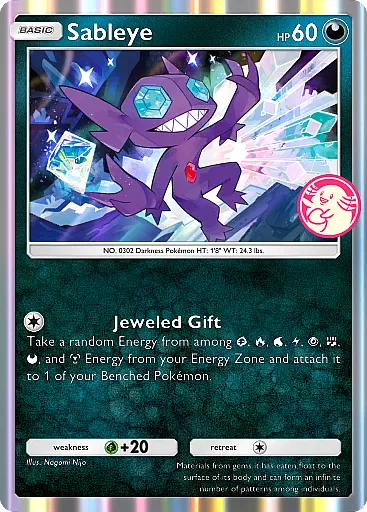
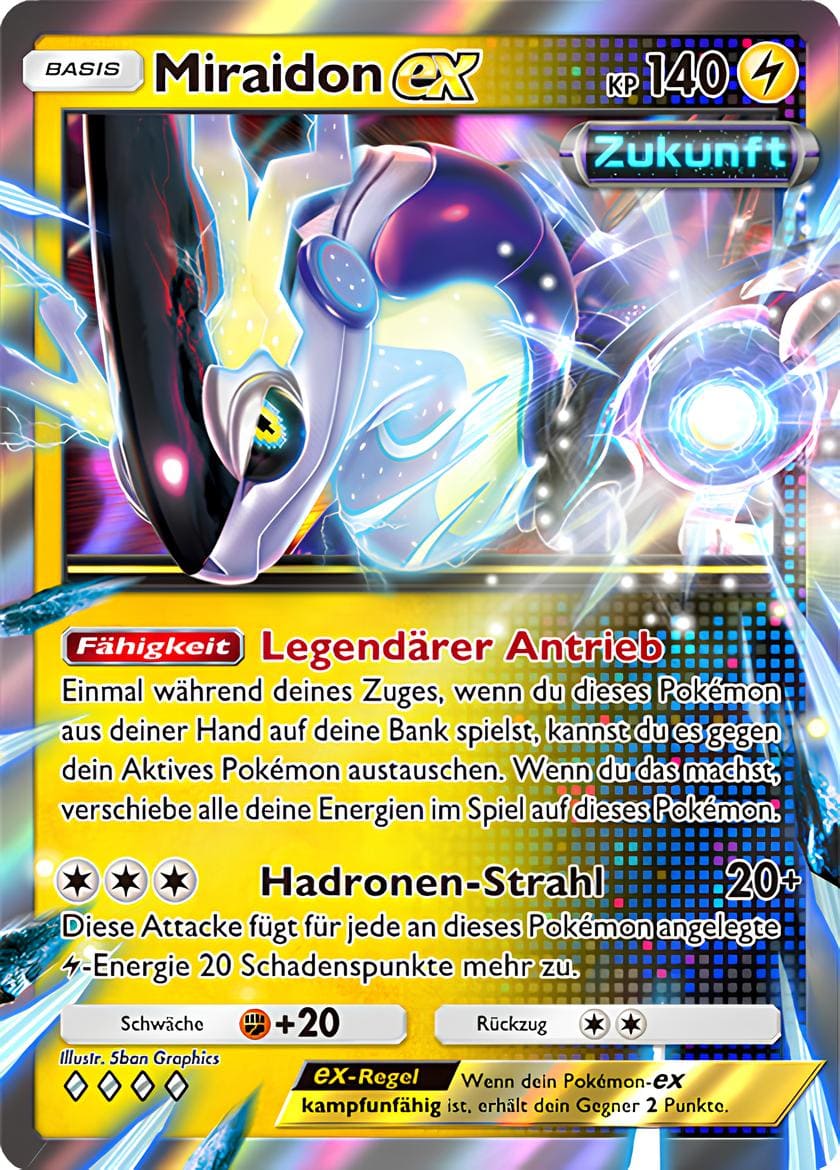
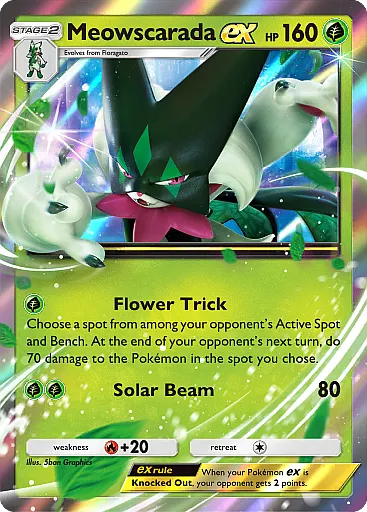
Mega Sceptile ex is one of the strongest Grass-based decks to emerge from the previous Pokémon TCG Pocket season. It quickly became a serious meta contender because it combines a powerful Stage 2 attacker with some of the best evolution support in the game. The deck’s main boss Pokémon is Mega Sceptile ex. For two Grass Energy, Mega Sceptile ex deals 130 damage and guarantees Poison on the opposing Active Pokémon. That Poison damage adds another 10 damage between turns, meaning Mega Sceptile ex often creates 140 total damage pressure from a single attack cycle. This gives it a damage profile very similar to Mega Blaziken ex, which also combines large direct damage with a guaranteed status condition. Mega Sceptile ex does need to discard an Energy after attacking. Unlike Fire decks, this list does not have a direct Energy-recovery card that can immediately attach a Grass Energy from the discard pile back to the Active Spot. However, this drawback is manageable because Mega Sceptile ex only needs two Energy to attack. If you sequence your Energy attachments correctly and keep a second attacker developing, the discard cost is not as punishing as it first appears. The deck does not rely only on Mega Sceptile ex. It also plays regular Sceptile as an alternative Stage 2 attacker. Regular Sceptile deals 70 damage for two Energy, with the potential to deal 50 more damage on a successful coin flip. That means it can reach 120 damage while giving you a non-ex attacker option. This matters for prize mapping. In games where the opponent is trying to trade efficiently against Mega Sceptile ex, regular Sceptile can be a safer attacker that still threatens meaningful damage. The key reason this deck functions so well is Grass support. Quick-Grow Extract is one of the strongest evolution Items available to any type. It lets you choose a Grass Pokémon in play and evolve it directly into a random Grass Pokémon from your deck that evolves from it. In practice, this gives the deck access to much faster Treecko into Grovyle, Sceptile, or Mega Sceptile ex lines. This type of acceleration is extremely valuable because Stage 2 decks normally need time. Without Quick-Grow Extract, you often need Treecko, Grovyle, Sceptile or Mega Sceptile ex, plus multiple turns of setup. With Quick-Grow Extract, you can shortcut that process and create powerful board states before slower decks are ready. Fragrant Forest is another major reason Grass decks are so consistent in the current format. Once per turn, Fragrant Forest lets you search for a Basic Grass Pokémon from your deck. That means the deck is much less dependent on Poké Ball than most other archetypes. Instead of having only a one-time chance to find a Basic Pokémon from an Item, Fragrant Forest can keep finding Treecko, Teal Mask Ogerpon ex, Celebi, or other Basics across several turns. That consistency advantage cannot be overstated. Grass decks can establish their board more reliably than many other Stage 2 decks because Fragrant Forest gives them repeated access to their foundational pieces. Teal Mask Ogerpon ex is included mainly as a meta utility card. Sleep and other status conditions are extremely relevant in the current Pokémon TCG Pocket environment, especially with decks that use Igglybuff, Espeon, Darkrai, Swablu, and other status-based pressure tools. Teal Mask Ogerpon ex helps solve that problem by protecting your Pokémon with attached Energy from status conditions and allowing them to recover from existing conditions. This is a massive benefit against Sleep decks. If the opponent’s strategy depends on keeping your Active Pokémon asleep, Teal Mask Ogerpon ex can prevent that engine from functioning properly. It gives Mega Sceptile ex a much better chance to continue attacking instead of losing tempo to Sleep checks, forced switches, or passive Darkrai damage. Celebi is another clever utility card in the list. Celebi allows your evolved Pokémon to use attacks from earlier stages in their evolution line. This creates an important tactical option with Sceptile and Mega Sceptile ex. Grovyle has an attack that can deal 50 damage to any Pokémon on the opponent’s side of the field. With Celebi in play, your Stage 2 Pokémon can access that snipe option when direct damage to the Active Spot is not the best play. That is especially useful when your opponent has a fragile Bench Pokémon, an important support card, or a damaged target that is trying to hide. Instead of always attacking the Active Pokémon, you can use Grovyle’s attack through Celebi to pressure the exact target that matters most. Chingling gives the deck another disruptive angle. As a Baby Pokémon, Chingling can attack without needing Energy. Its damage is low, but its real purpose is Item lock. After Chingling attacks, the opponent cannot use Item cards on their next turn. This can be devastating against decks that rely on Poké Ball, Rare Candy, Quick-Grow Extract, healing Items, switching effects, or other Item-based consistency. Chingling is not a card you want to use in every game. It is best when your opponent has a weak setup turn or when you know that denying Items will delay their entire game plan. Against fast evolution decks, an early Chingling attack can prevent a key Rare Candy or Poké Ball turn. Against aggressive decks, it can slow down their search and leave them with fewer options. Overall, Mega Sceptile ex is a high-pressure evolution deck with an unusually deep toolkit. It can attack hard, spread Poison, evolve quickly, resist status pressure, access Bench damage, and disrupt Item-dependent opponents. That combination makes it much more flexible than a standard Stage 2 deck.
Gameplay Video
Key Cards
Treecko
appears in nearly every tournament list (average 2.00 copies). Core part of the archetype's engine.
Grovyle
appears in nearly every tournament list (average 1.59 copies). Core part of the archetype's engine.
Sceptile
appears in nearly every tournament list (average 1.01 copies). Core part of the archetype's engine.
Mega Sceptile ex
appears in nearly every tournament list (average 1.07 copies). Core part of the archetype's engine.
Early Game
The early game is about building Treecko lines as quickly as possible while deciding whether you need a fast Mega Sceptile ex, a regular Sceptile, or a disruptive Chingling opening. Your ideal opening includes Treecko, Fragrant Forest, and either Quick-Grow Extract or a way to find evolution pieces. Fragrant Forest should be played early whenever possible because it gives you repeatable access to Basic Grass Pokémon. Once it is active, you can use it to find Treecko, Teal Mask Ogerpon ex, or a utility Basic depending on the matchup. Quick-Grow Extract is your most explosive setup card. Use it when evolving immediately gives you a meaningful advantage. For example, evolving Treecko into Grovyle or Sceptile quickly can force the opponent to react before they have built their own board. Do not always rush Mega Sceptile ex immediately. In some matchups, regular Sceptile is enough early and gives you a more efficient prize trade. In others, Mega Sceptile ex is the best way to apply early pressure and force the opponent into defensive play. Chingling is strongest when you can predict an Item-heavy response. If your opponent has opened slowly and likely needs Poké Ball, Rare Candy, or search Items to stabilize, Chingling can buy you a full turn of tempo.
Mid Game
The mid game is where Mega Sceptile ex becomes the deck’s main threat. Once it is online, your goal is to keep attacking while maintaining a second evolution line on the Bench. Mega Sceptile ex’s 130 damage plus Poison is enough to pressure most relevant Pokémon in the format. Even when it does not take an immediate knockout, Poison can force the opponent into awkward decisions. They may need to retreat, switch, heal, evolve, or sacrifice a damaged Pokémon. Regular Sceptile becomes important when you want to avoid giving up a high-value Mega Pokémon or when its coin-flip damage creates a clean knockout line. The ability to switch between a major ex attacker and a regular Stage 2 attacker makes the deck harder to prize map against. Use Celebi carefully. It does not need to be active every game, but it becomes extremely strong when Grovyle’s Bench snipe can remove a low-HP support Pokémon or finish a damaged target. Do not automatically use Mega Sceptile ex’s main attack if a targeted Grovyle attack through Celebi wins more efficiently. Teal Mask Ogerpon ex should be established before the opponent’s status engine becomes too threatening. Against Sleep decks, getting Ogerpon onto the Bench early can be more important than rushing a second attacker. Cyrus is a major mid-game tool. It helps pull up damaged Bench Pokémon or key support targets after you have created pressure with Poison, Grovyle snipes, or earlier attacks.
Late Game
The late game is about preserving Energy, calculating Poison damage, and choosing the safest attacker for the final prize sequence. Mega Sceptile ex is usually your closer. Its damage is reliable, and Poison means that many Pokémon are effectively in knockout range even when they survive the direct attack. Always count the Poison tick before deciding whether you need another attack or whether the opponent’s Active Pokémon will fall naturally. Because Mega Sceptile ex discards an Energy after attacking, you need to plan your final turns in advance. Avoid attaching Energy without considering whether you will need to power a second Sceptile line later. If Mega Sceptile ex is about to be knocked out, make sure you already have another attacker ready. In some games, regular Sceptile is the better final attacker because it gives up fewer prizes. In others, Mega Sceptile ex’s consistent damage is worth the higher-risk trade. Chingling can also have a surprising late-game role. If the opponent needs Items to find their final answer, one Item-lock turn may be enough to stop their comeback.
Card Replacements
Treecko appears in nearly every tournament list and defines the archetype. If you cannot craft it, consider a different deck rather than substituting.
Iono is the closest universal draw Supporter if you are short on Professor's Research, though it trades raw card quantity for a hand reset.
Sabrina forces a switch from the opponent's choice; less precise than Cyrus but keeps disruption pressure.
Chingling appears in around 41% of tournament lists as a flex slot, so it is a flex slot rather than a core piece. Lists swap this for matchup-specific tech Pokémon.
Common Mistakes
- Using Quick-Grow Extract before checking which evolution targets are still in the deck.
- Benching too many utility Pokémon and leaving no room for a backup Treecko line.
- Rushing Mega Sceptile ex when regular Sceptile would create a safer prize trade.
- Ignoring Teal Mask Ogerpon ex in Sleep-heavy matchups.
- Using Chingling after the opponent has already completed their Item-based setup.
- Forgetting to count Poison damage before planning the next attack.
- Attaching Energy to the wrong attacker before deciding whether Mega Sceptile ex or regular Sceptile is the main route.
- Using Celebi only as a passive Bench card instead of looking for Grovyle snipe opportunities.
- Playing Cyrus before identifying the opponent’s real comeback piece.
Tips & Tricks
- Play Fragrant Forest early whenever possible because it gives repeatable Basic Grass Pokémon access.
- Use Quick-Grow Extract aggressively when it creates an immediate tempo advantage.
- Build at least one backup Treecko line before committing fully to Mega Sceptile ex.
- Against Sleep decks, prioritize Teal Mask Ogerpon ex before the opponent establishes their full status engine.
- Use Celebi plus Grovyle’s attack to target fragile Bench Pokémon or damaged support cards.
- Use Chingling to deny Poké Ball, Rare Candy, and other Item-dependent seup turns.
- Count Poison damage before using Cyrus or committing to a second attack.
- Regular Sceptile can be the correct attacker when you need a safer prize trade.
- Keep enough Energy available to power a second attacker after Mega Sceptile ex discards.
Frequently Asked Questions
What is the Mega Sceptile ex Sceptile deck in Pokémon TCG Pocket?
Mega Sceptile ex Sceptile is an archetype built around Treecko and Grovyle, using Grass energy. This guide is built from 170 real tournament decklists across 34 events.
Is Mega Sceptile ex Sceptile good right now?
Based on current tournament lists, Mega Sceptile ex Sceptile appears regularly in competitive play. We do not claim a win rate — refer to the tier list for current placement.
What are the key cards in Mega Sceptile ex Sceptile?
The most-played cards across tournament lists are Treecko, Grovyle and Sceptile. The list usually runs around 9 different Trainer cards for consistency and disruption.
What energy does Mega Sceptile ex Sceptile use?
Most lists run Grass energy.
Where does this guide's data come from?
This is a generated draft based on 170 tournament decklists imported from Limitless. The card list reflects what appears most often in real competitive play, not a fixed recipe.
How This Deck Guide Was Generated
This guide is based on 170 tournament decklists across 34 tournaments imported from Limitless. The decklist shown reflects the most common competitive build at the time of generation.