Butterfree Mega Sceptile ex Deck Guide
 Grass
GrassButterfree Mega Sceptile ex is a Pokémon TCG Pocket Grass deck that combines Caterpie’s Quick Growth evolution route with Butterfree’s efficient healing damage and Mega Sceptile ex’s powerful Poison-finishing attack. Use Fragrant Forest and Quick-Grow Extract to establish your evolution lines quickly, then choose the right attacker for each prize trade.

Deck List
Pokémon (1)
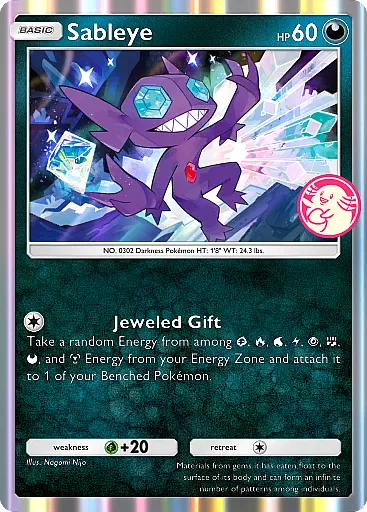
Chingling
Trainers (19)
Butterfree
Caterpie
Metapod
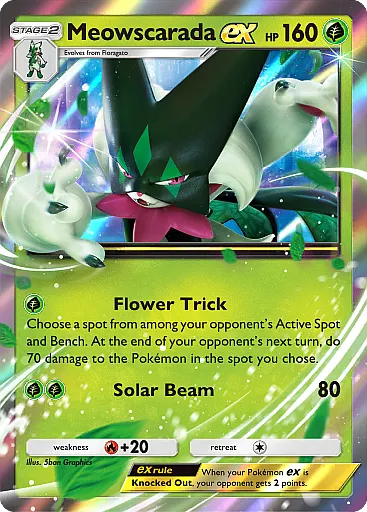
Mega Sceptile ex
Treecko
Grovyle
Rare Candy
Quick-Grow Extract
Professor’s Research
Cyrus
Pokémon Center Lady
Copycat
Fragrant Forest
Energy
Strengths
- Caterpie can evolve automatically from the Active Spot through Quick Growth.
- Butterfree deals damage while healing itself.
- Butterfree gives the deck a lower-risk non-ex attacker.
- Mega Sceptile ex provides strong finishing damage.
- Poison adds pressure after Mega Sceptile ex attacks.
- Quick-Grow Extract speeds up both evolution lines.
- Fragrant Forest provides repeated access to Basic Grass Pokémon.
- Chingling can disrupt Item-based setup.
- Grovyle can pressure the opponent’s Bench.
- Pokémon Center Lady adds healing and Special Condition recovery.
- The deck can choose between tempo attacks and high-damage Mega turns.
Weaknesses
- The deck relies on two Stage 2 evolution lines.
- Mega Sceptile ex gives up three points when Knocked Out.
- Caterpie must remain Active through the opponent’s turn for Quick Growth.
- Fragrant Forest finds a random Basic Grass Pokémon.
- Quick-Grow Extract uses random evolution selection.
- Butterfree’s damage can be too low against high-HP Pokémon ex.
- Mega Sceptile ex needs time and resources to establish.
- Chingling Item denial is temporary.
- The deck can become vulnerable if Treecko or Caterpie are Knocked Out before evolving.
- The deck may struggle when it draws evolutions without Basics.
Strategy Overview
Butterfree Mega Sceptile ex is a Grass deck built around two different Stage 2 Pokémon that fill very different roles. Butterfree is the tempo attacker. Mega Sceptile ex is the high-damage finisher. The deck does not need to rush immediately into Mega Sceptile ex. Instead, it can begin with Caterpie, develop into Butterfree quickly, apply early pressure, heal damage over time, and use that breathing room to prepare Mega Sceptile ex for the turns that matter most. The most important new card in the deck is Caterpie. Caterpie has the Ability Quick Growth. At the end of the opponent’s turn, if Caterpie is in the Active Spot, it can evolve using a random card from the deck that evolves from Caterpie. In this deck, that means Caterpie can naturally become Metapod without you needing to hold Metapod in hand. That may not sound like a huge advantage at first, but it changes the tempo of the entire evolution line. Normally, Stage 2 decks need to find a Basic Pokémon, wait a turn, find the Stage 1 Pokémon, wait again, then evolve into the Stage 2. Caterpie shortens that process. If it remains Active through the opponent’s turn, it can become Metapod automatically. On your next turn, Metapod can evolve into Butterfree if you have Butterfree in hand. This gives the deck a realistic route toward an early Butterfree without relying only on Rare Candy. Butterfree is a very efficient attacker once it enters play. Its attack, Sunny Wind, deals 60 damage and heals 20 damage from Butterfree. That creates a useful early-game trade pattern. Butterfree can attack, take some damage, heal part of that damage away, and continue attacking without immediately giving up a knockout. Butterfree is not meant to overpower every large Pokémon ex by itself. Its role is to create tempo, take efficient knockouts on smaller targets, and buy time for Mega Sceptile ex. The healing effect is especially useful because it makes Butterfree harder to remove than its 130 HP might initially suggest. Opponents often need to commit more attacks than expected, especially when Butterfree is able to heal repeatedly across multiple turns. Mega Sceptile ex is the deck’s major damage threat. Mega Sceptile ex is a Stage 2 Mega Evolution Pokémon ex and should usually be treated as the deck’s endgame attacker. Its Terminating Tail attack deals 130 damage and then poisons the opposing Active Pokémon after you discard a Grass Energy from Mega Sceptile ex. The Poison damage matters. The attack does not simply create a 130-damage turn. It also leaves the opponent’s Active Pokémon under additional pressure between turns. This can finish targets that barely survive the initial damage, make healing more important for the opponent, or force an awkward retreat. Mega Sceptile ex is strongest when it enters the Active Spot to take a major knockout or threaten a key prize trade. Because it is a Mega Evolution Pokémon ex, it gives up three points when Knocked Out. That means you should avoid exposing it too early unless it can create immediate value. The deck’s ideal rhythm is often: Open with Caterpie or Chingling. Develop Butterfree through Quick Growth or normal evolution. Use Butterfree to apply pressure and heal damage. Bench Treecko and begin building toward Mega Sceptile ex. Use Fragrant Forest and Quick-Grow Extract to improve evolution consistency. Bring Mega Sceptile ex Active when its 130 damage and Poison effect can take an important knockout. Treecko and Grovyle form the second Stage 2 line. Treecko is your Mega Sceptile ex setup Pokémon. Grovyle is useful because it can attack the opponent’s Bench with Slicing Snipe. This is not the core win condition of the deck, but it gives you a secondary way to pressure damaged support Pokémon or unfinished evolution lines. Grovyle can be especially useful when the opponent benches a fragile Basic Pokémon and expects it to be safe while they focus on the Active Spot. Quick-Grow Extract is one of the deck’s strongest consistency cards. It lets you evolve a Pokémon in play into a random Pokémon from your deck that evolves from it. In this list, it can help speed up both major evolution lines. You can use it to move from Caterpie toward Metapod, from Metapod toward Butterfree, from Treecko toward Grovyle, or from Grovyle toward Mega Sceptile ex when the relevant evolution is still in the deck. The important word is random. Quick-Grow Extract does not guarantee a specific evolution if more than one valid evolution exists in the deck. In this deck, the evolution lines are clean enough that it should usually be predictable, but you should still check which cards remain in the deck before using it. Fragrant Forest is the other key Grass support card. Once during each player’s turn, that player can take a random Basic Grass Pokémon from their deck into their hand. In this deck, Fragrant Forest can help find Caterpie or Treecko. That removes some of the pressure normally placed on Poké Ball. Instead of relying only on Items to find Basics, the Stadium can repeatedly give you Grass setup pieces over multiple turns. However, Fragrant Forest is not a guaranteed search card. If both Caterpie and Treecko remain in the deck, you may not always receive the Basic Pokémon you wanted. Plan your turns around that uncertainty. Chingling gives the deck a disruptive opening route. Chingling’s Jingly Noise attack deals 10 damage and prevents the opponent from playing Item cards from hand during their next turn. This can interfere with opponent search cards, Rare Candy, switching Items, healing Items, and setup tools. Chingling is most valuable during the first turns of the game. If the opponent needs Items to establish a Stage 2 attacker, find a Basic Pokémon, or recover from a poor opening hand, one Item-lock turn can be enough for Caterpie or Treecko to survive and evolve safely. Do not treat Chingling as a permanent lock. The opponent can still use Supporters, evolve when possible, attack, retreat, and make other legal plays. Chingling is there to slow the opponent down, not completely stop them from playing. Professor’s Research and Copycat provide draw support. Professor’s Research is best when you need several pieces at once, such as Caterpie, Treecko, Butterfree, Mega Sceptile ex, Rare Candy, or Energy. Copycat becomes useful when the opponent has a larger hand. It can refresh a weak hand into more evolution pieces, support cards, or attackers. Cyrus is the deck’s targeted finishing Supporter. Mega Sceptile ex already creates direct Active Spot pressure, while Grovyle can damage Bench Pokémon. Cyrus gives you a way to bring a damaged Bench Pokémon into the Active Spot when it is ready to be finished. This is particularly useful after Grovyle has softened a Bench target or when the opponent retreats a damaged attacker to protect it. Pokémon Center Lady gives the deck another defensive layer. Butterfree can heal itself through Sunny Wind, but Pokémon Center Lady allows you to heal 30 damage from one of your Pokémon and remove a Special Condition. This is useful against Poison, Burn, Sleep, Confusion, or Paralysis. It can also keep a damaged Mega Sceptile ex alive long enough to take another prize. Overall, Butterfree Mega Sceptile ex is a flexible Grass deck with two clear stages. The early and mid game belong to Caterpie, Butterfree, Chingling, Fragrant Forest, and Quick-Grow Extract. The late game belongs to Mega Sceptile ex. The deck performs best when you do not force the Mega Evolution line too early. Let Butterfree pressure the board, use Caterpie’s free evolution route whenever possible, and only commit Mega Sceptile ex when the opponent is forced into a difficult prize exchange.
Gameplay Video
Early Game
Prioritize Caterpie and Treecko. If Caterpie starts Active, keep it there whenever it is safe to do so. At the end of the opponent’s turn, Quick Growth can evolve Caterpie into Metapod from the deck. Bench Treecko early when possible. Mega Sceptile ex is your major payoff, so you want its evolution line ready before the game reaches the late turns. Use Fragrant Forest to find a missing Basic Grass Pokémon. Use Poké Ball only when you need a specific Basic immediately or when Fragrant Forest cannot give you enough reliability. Use Chingling when slowing the opponent’s Item cards is more valuable than immediate damage.
Mid Game
The mid game begins when Butterfree is active or when one of your Stage 2 lines is close to completion. Use Butterfree to take efficient prizes and heal itself through Sunny Wind. Do not expose Mega Sceptile ex just because it is available. Use Quick-Grow Extract to speed up the evolution line that will matter most next turn. Use Grovyle’s Bench pressure when the opponent has a vulnerable setup Pokémon or a damaged Bench target. Use Professor’s Research when you need multiple pieces. Use Copycat when the opponent has a large hand and your own hand needs a reset.
Late Game
The late game is where Mega Sceptile ex should take over. Bring Mega Sceptile ex Active when 130 damage plus Poison can remove a major target or create a winning prize trade. Use Cyrus to pull a damaged Bench Pokémon Active when Grovyle or prior attacks have already prepared it. Use Pokémon Center Lady to protect an important attacker when healing 30 damage changes the opponent’s knockout math. Remember that Mega Sceptile ex gives up three points when Knocked Out. Do not place it into danger unless it can immediately create enough value to justify the risk.