Great Tusk Koraidon ex Deck Guide
Koraidon ex Great Tusk is a Pokémon TCG Pocket Ancient deck built around Koraidon ex’s flexible Legendary Drive ability, Great Tusk’s efficient Fighting damage, and Furfrou’s protection from self-inflicted bench damage. Professor Sada, Ancient Booster Energy Capsule, Arena of Antiquity, and Korinna turn the deck into a fast and resilient Fighting strategy.

Deck List
Pokémon (5)
Great Tusk
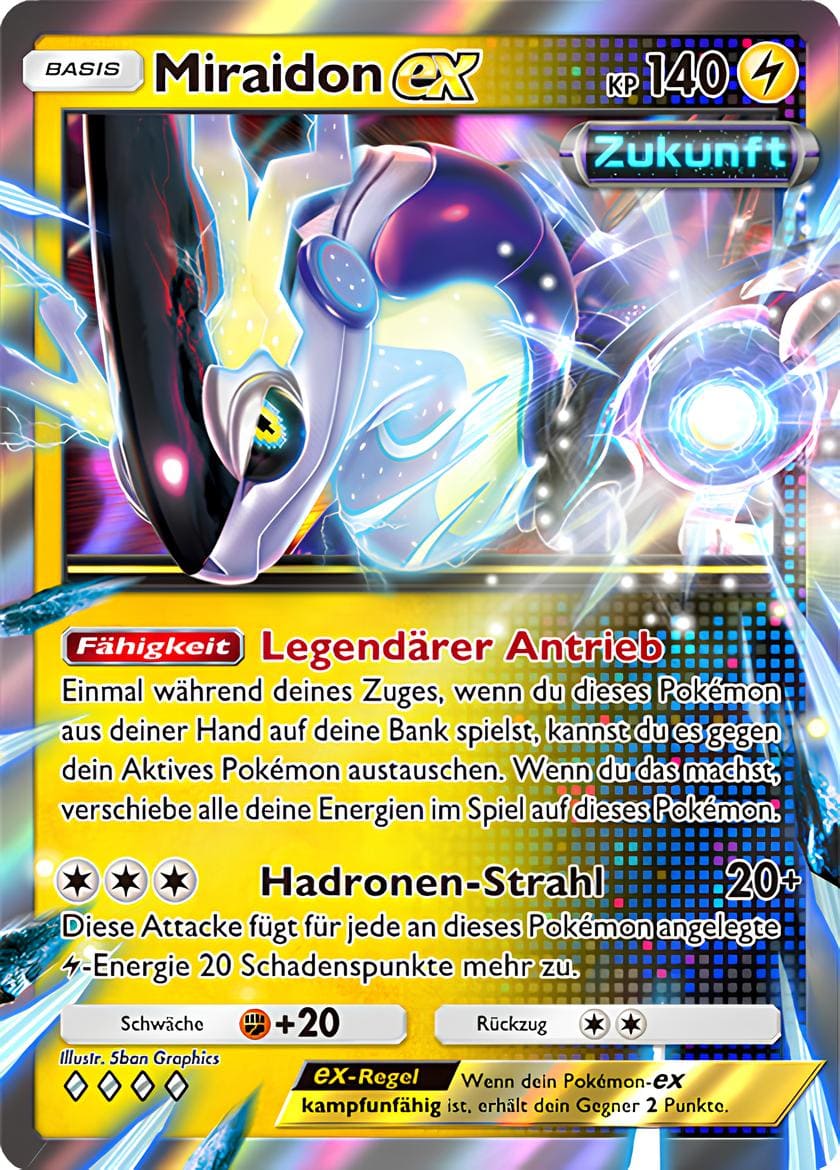
Koraidon ex
Furfrou
Trainers (16)
Professor's Research
Cyrus
Poké Ball
Professor Sada
Ancient Booster Energy Capsule
Copycat
Arena of Antiquity
Starting Plains
Korrina
Pokémon Center Lady
Lucky Ice Pop
Sabrina
Source decklists
Source decklists referenced for this guide:
Strengths
- Koraidon ex creates unmatched mobility through Legendary Drive.
- Great Tusk is a strong single-prize attacker with 120 HP.
- Furfrou can ignore Great Tusk’s 20 self-damage to the Bench.
- Professor Sada creates powerful Ancient Energy acceleration turns.
- Ancient Booster Energy Capsule makes Great Tusk reach 160 HP.
- Arena of Antiquity boosts Fighting damage against opposing ex Pokémon.
- Korinna can create explosive knockout turns against ex Pokémon.
- The deck can pivot without paying Great Tusk’s high retreat cost.
- Furfrou is also a useful early attacker for one Energy.
- Great Tusk can trade favorably into ex decks because it only gives up one prize.
Weaknesses
- Great Tusk damages your own Bench every time it attacks.
- The deck needs Furfrou positioning to reduce self-damage pressure.
- Koraidon ex is most powerful when held in hand for the correct pivot turn.
- Ancient Booster Energy Capsule can be removed or bypassed by certain strategies.
- The deck can struggle if it does not find Professor Sada after Energy reaches the discard pile.
- Great Tusk has a high retreat cost without Koraidon ex support.
- The Fighting damage boosts are strongest against ex decks and less important against non-ex strategies.
- Poor Bench management can leave your support Pokémon vulnerable to Great Tusk damage.
- The deck can lose tempo if Koraidon ex is played too early without a meaningful Energy transfer.
Key Matchups
- Aggressive Basic-only decks Even
- Mirror or other Great Tusk lists Even
- Disruption / Cyrus + Sabrina decks Unfavored
Strategy Overview
Koraidon ex Great Tusk is one of the most interesting decks to emerge from the Paradox Drive season because it introduces a completely new kind of flexibility to Pokémon TCG Pocket. The deck combines Ancient Pokémon, Fighting-type damage boosts, Energy acceleration, bench protection, and an unusual pivot mechanic that did not exist in the format before Koraidon ex. The central card is Koraidon ex. Its Legendary Drive effect gives the deck a powerful way to change the Active Pokémon without paying normal retreat costs. When Koraidon ex is played from your hand onto the Bench, it can move directly into the Active Spot and take all Energy attached to one of your Pokémon in play. This creates a highly flexible attack transition. A Great Tusk that has already attacked, is damaged, or has three retreat costs can suddenly move out of the Active Spot without needing to retreat normally. Koraidon ex comes forward, receives the Energy, and can immediately threaten its own attack. That makes Koraidon ex much more than just another powerful ex attacker. It is also a mobility tool, an Energy-transfer tool, and a way to preserve tempo. In a format where retreat costs and damaged Active Pokémon can easily slow down a turn, Legendary Drive gives this deck a major advantage. Great Tusk is the deck’s primary non-ex attacker. For two Energy, Great Tusk deals 80 damage. That is already a strong rate for a single-prize Pokémon with 120 HP, but its attack also deals 20 damage to each of your Benched Pokémon. At first glance, that self-damage looks like a major drawback. However, the deck is designed specifically to turn that drawback into something manageable. The key protection card is Furfrou. Furfrou takes 20 less damage from attacks, which means it can sit safely on the Bench while Great Tusk attacks. Since Great Tusk deals 20 damage to each of your Benched Pokémon, Furfrou effectively ignores that damage. This makes Furfrou a very important bench-protection option in the deck. Furfrou also has value before Great Tusk enters play. It can attack for one Energy and deal 30 damage, making it a useful early-game attacker when your Great Tusk or Koraidon ex line is not ready. Because it is not an ex Pokémon and does not require a complicated setup, Furfrou gives the deck a stable opening option. The deck also benefits heavily from the new Ancient support cards. Professor Sada is one of the biggest reasons this archetype works. Professor Sada can attach three different types of basic Energy from the discard pile onto an Ancient Pokémon. In this deck, that gives you a way to rebuild Energy after discards, accelerate a new attacker, or create an unexpected Koraidon ex turn. Because Koraidon ex can move Energy from another Pokémon when it enters play, Professor Sada and Legendary Drive combine especially well. You can use Professor Sada to power an Ancient Pokémon, use Great Tusk to apply pressure, and then later shift Energy into Koraidon ex when you need to pivot or attack from a different angle. Ancient Booster Energy Capsule is another major support card. It increases the HP of your Ancient Pokémon by 40. This is extremely valuable on Great Tusk. A normal Great Tusk has 120 HP, but with Ancient Booster Energy Capsule it reaches 160 HP. That means it can survive attacks that would normally knock it out, trade more effectively with ex Pokémon, and force the opponent to spend more resources before taking a prize. Koraidon ex also benefits from the extra HP, making it a much more difficult target to remove. In a deck that wants to continuously transfer Energy and rotate attackers, extra durability has real strategic value. The Fighting support package is what gives the deck its explosive damage ceiling. Arena of Antiquity increases the damage dealt by your Fighting Pokémon against opposing ex Pokémon. Korinna adds even more pressure by increasing the damage from your Fighting Pokémon against ex Pokémon for the turn. Together, these cards let Great Tusk and Koraidon ex reach damage thresholds that would normally be difficult for non-ex attackers. This is especially important because Great Tusk is only worth one prize. If Great Tusk can trade efficiently into opposing ex Pokémon while being protected by Ancient Booster Energy Capsule and supported by Arena of Antiquity or Korinna, the prize trade can become heavily favorable for you. Overall, Koraidon ex Great Tusk is a tempo-heavy Ancient Fighting deck. It wins by forcing the opponent to deal with multiple problems at once: a large Great Tusk, a protected bench, a flexible Koraidon ex pivot, Energy acceleration from Professor Sada, and boosted Fighting damage into ex Pokémon.
Gameplay Video
Key Cards
Great Tusk
appears in nearly every tournament list (average 1.99 copies). Core part of the archetype's engine.
Koraidon ex
appears in nearly every tournament list (average 1.03 copies). Core part of the archetype's engine.
Furfrou
appears in roughly 94% of tournament lists (average 1.63 copies). Core part of the archetype's engine.
Early Game
Your early-game goal is to establish either Great Tusk or Furfrou in the Active Spot while preparing Koraidon ex and Ancient support cards on the Bench. Furfrou is often the safer early attacker. It only needs one Energy to attack and can deal 30 damage while you build your board. It also gives you a protected Bench Pokémon later once Great Tusk starts using its attack. Great Tusk is the stronger damage option, but do not rush it into the Active Spot unless you have a plan for the self-inflicted Bench damage. Ideally, you want at least one Furfrou on the Bench before repeatedly attacking with Great Tusk. Poké Ball and Professor’s Research are important early consistency cards. Use Poké Ball to find Great Tusk, Furfrou, or Koraidon ex depending on your hand. Professor’s Research helps you find the exact Trainer cards you need, including Professor Sada, Ancient Booster Energy Capsule, Arena of Antiquity, or Korinna. Starting Plains can also be useful early because it improves access to Basic Pokémon and helps establish the board before you commit to Arena of Antiquity later.
Mid Game
The mid game is where the deck becomes difficult to play against. Ideally, you want Great Tusk attacking, Furfrou protecting your Bench, and Koraidon ex available in hand or on the Bench as a future pivot. Great Tusk should usually be your preferred attacker against decks where a single-prize Pokémon can trade efficiently. Its 80 base damage is already respectable, but Arena of Antiquity and Korinna can turn it into a real threat against ex Pokémon. Ancient Booster Energy Capsule is strongest when attached before the opponent can easily remove Great Tusk. Turning Great Tusk from 120 HP into 160 HP can completely change the prize trade. Instead of taking a clean knockout, the opponent may need two attacks, a damage boost, or a different attacker. Koraidon ex should not always be played immediately. Often, the best use of Koraidon ex is as a response card. When Great Tusk becomes trapped Active, damaged, or no longer useful, you can play Koraidon ex from hand, move it forward, transfer the Energy, and continue attacking without losing tempo. Professor Sada becomes very important in the mid game. Once Energy has reached the discard pile, Professor Sada can accelerate a new Ancient attacker and make your next turn much stronger than the opponent expects.
Late Game
The late game is about prize mapping and choosing the right attacker for the final turns. Great Tusk is usually the best prize-trade attacker because it only gives up one prize. If it has Ancient Booster Energy Capsule attached, it can be especially difficult for the opponent to remove efficiently. Koraidon ex becomes more important when you need to finish a large target, move Energy off a damaged Pokémon, or avoid paying Great Tusk’s retreat cost. Legendary Drive is often strongest late because the opponent has fewer ways to respond after you suddenly change your Active Pokémon and preserve your Energy. Cyrus is a powerful late-game card because it can pull up a damaged Bench Pokémon after Great Tusk, Furfrou, or Koraidon ex has created pressure elsewhere. Sabrina can also force an awkward switch and disrupt the opponent’s final prize plan. Before your final turn, always count three things: your available Fighting damage boosts, your Energy in play and discard, and whether Koraidon ex can create a better Active Spot than simply retreating.
Card Replacements
Great Tusk appears in nearly every tournament list and defines the archetype. If you cannot craft it, consider a different deck rather than substituting.
Iono is the closest universal draw Supporter if you are short on Professor's Research, though it trades raw card quantity for a hand reset.
Sabrina forces a switch from the opponent's choice; less precise than Cyrus but keeps disruption pressure.
Pokémon Communication swaps a Pokémon in hand for any from the deck — useful if Poké Ball's random pull is unreliable for this build.
Common Mistakes
- Playing Koraidon ex immediately instead of saving it for a key pivot turn.
- Attacking with Great Tusk before establishing Furfrou on the Bench.
- Overcommitting too many fragile Pokémon to the Bench.
- Using Professor Sada without planning which Ancient attacker needs the Energy.
- Attaching Ancient Booster Energy Capsule to the wrong Pokémon.
- Playing Arena of Antiquity when Starting Plains would better support setup.
- Using Korinna before calculating whether the extra 30 damage creates a real knockout.
- Retreating Great Tusk manually instead of using Koraidon ex to transfer the Energy.
- Forgetting that Great Tusk is often your best prize-trade attacker against ex decks.
Tips & Tricks
- Try to keep Koraidon ex in hand until Legendary Drive creates a major tempo swing.
- Set up Furfrou before using Great Tusk repeatedly.
- Use Professor Sada after you have meaningful Energy in the discard pile.
- Attach Ancient Booster Energy Capsule to Great Tusk before committing it to a long trade.
- Use Arena of Antiquity and Korinna together when you need a major damage spike into an ex Pokémon.
- Use Furfrou early to apply pressure while Great Tusk and Koraidon ex are prepared.
- Do not be afraid to sacrifice Great Tusk when it gives you a favorable one-prize-for-two-prize trade.
- Plan your Bench so Great Tusk’s self-damage does not create easy Cyrus or Sabrina targets.
- Use Koraidon ex to escape Great Tusk’s three retreat cost without losing your Energy attachments.
Frequently Asked Questions
What is the Great Tusk Koraidon ex deck in Pokémon TCG Pocket?
Great Tusk Koraidon ex is an archetype built around Great Tusk and Koraidon ex, using the deck's energy. This guide is built from 115 real tournament decklists across 36 events.
Is Great Tusk Koraidon ex good right now?
Based on current tournament lists, Great Tusk Koraidon ex appears regularly in competitive play. We do not claim a win rate — refer to the tier list for current placement.
What are the key cards in Great Tusk Koraidon ex?
The most-played cards across tournament lists are Great Tusk, Koraidon ex and Furfrou. The list usually runs around 12 different Trainer cards for consistency and disruption.
What energy does Great Tusk Koraidon ex use?
Energy choice varies across tournament lists for this archetype.
Where does this guide's data come from?
This is a generated draft based on 115 tournament decklists imported from Limitless. The card list reflects what appears most often in real competitive play, not a fixed recipe.
How This Deck Guide Was Generated
This guide is based on 115 tournament decklists across 36 tournaments imported from Limitless. The decklist shown reflects the most common competitive build at the time of generation.