
Mega Floette Strategy Guide: Why Fairy Aura Makes It a Regulation M–A Threat
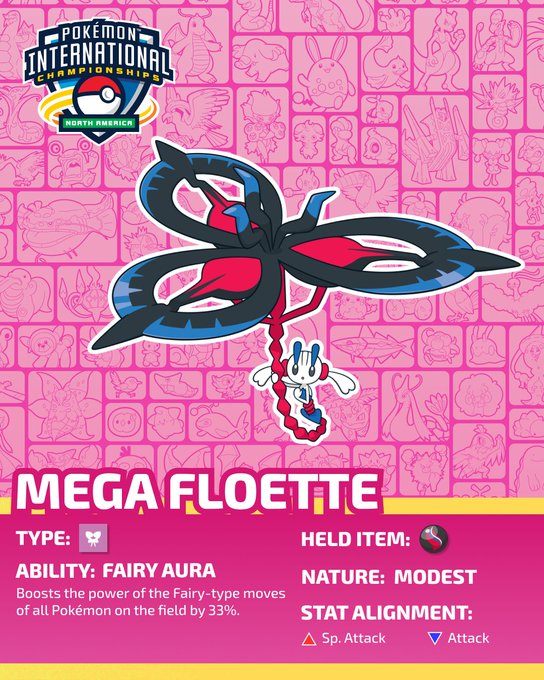
Mega Floette is quickly becoming one of the most interesting offensive threats in Pokémon Champions Regulation M–A. The official Pokémon Champions post highlighted Mega Floette as “the power of the flower,” pointing out that its Fairy Aura ability can boost Moonblast and Dazzling Gleam enough to deal heavy damage even into targets that would normally resist Fairy-type attacks. Based on the usage data shown in the current Pokémon Champions meta view, Mega Floette is not just a fun showcase pick. It already has a clear competitive identity, defined by strong Fairy pressure, Calm Mind scaling, and flexible positioning next to some of the most common Pokémon in the format. The most important part of Mega Floette’s profile is Fairy Aura. In the shared graphic, Fairy Aura is described as boosting the power of Fairy-type moves from all Pokémon on the field by 33%. That matters because Mega Floette already wants to use strong Fairy attacks such as Dazzling Gleam and Moonblast. When those attacks are boosted, the opponent cannot safely treat resisted damage as harmless chip. Even Pokémon that normally feel comfortable switching into Fairy-type attacks can be pushed into dangerous damage ranges after repeated spread damage or Calm Mind boosts.
Why Fairy Aura Changes the Damage Math
Fairy Aura is what separates Mega Floette from a normal special attacker. Dazzling Gleam becomes especially threatening because it applies pressure to both opposing Pokémon at once. In doubles formats, spread damage is valuable because it allows the Mega Floette player to make progress without needing to predict the exact switch or protect target every turn. If the opponent ignores Mega Floette, Dazzling Gleam can quickly soften up the entire board. If they focus it down, Mega Floette’s partner can often take advantage of the attention. Moonblast gives Mega Floette a more direct single-target option. While Dazzling Gleam is ideal for broad pressure, Moonblast is better when one specific target needs to be removed or forced into defensive play. Together, these two attacks create a strong offensive baseline: one move pressures the entire board, while the other lets Mega Floette focus down a key threat. The provided meta data also shows Calm Mind as one of Mega Floette’s most common moves. That is important because Calm Mind gives Floette a way to punish passive turns. If the opponent protects, switches, or spends a turn setting up their own position, Mega Floette can increase its Special Attack and Special Defense, making future Fairy attacks even harder to manage. A single Calm Mind can turn Mega Floette from a strong attacker into a win condition.
Common Moves and Builds
The most common moves shown in the data are Protect, Dazzling Gleam, Calm Mind, Moonblast, Draining Kiss, and Light of Ruin. Protect appearing near universal usage makes sense because Mega Floette needs safe turns to avoid double targeting, scout damage, and let its partner reposition. In a format where Pokémon like Incineroar, Garchomp, Sneasler, Charizard, Kingambit, and Basculegion are common, Protect is essential for surviving aggressive turns. Dazzling Gleam is the main spread damage tool and one of the biggest reasons to use Mega Floette. Moonblast is the reliable single-target Fairy move. Calm Mind gives the set a scaling option, while Draining Kiss gives some builds a recovery angle. Light of Ruin appears as a less common but still notable option, likely appealing to players who want maximum burst potential instead of safer, repeatable damage. The most common nature shown is Modest, followed by Timid. Modest fits the official graphic as well, which lists Mega Floette with a Modest nature and a Special Attack-focused stat alignment. This suggests that many players are prioritizing damage output over speed control. Timid builds still matter, especially on teams that want Mega Floette to move before certain threats, but the current data points toward Modest as the default damage-focused choice.
Team Partners and Meta Context
Mega Floette is showing up next to several strong meta Pokémon. From the example teams and usage view, common partners include Incineroar, Sinistcha, Garchomp, Sneasler, Charizard, Basculegion, Kingambit, Whimsicott, Venusaur, Tyranitar, Excadrill, Archaludon, Corviknight, and Hisuian Arcanine. This gives us a good picture of what Mega Floette teams are trying to do. Incineroar is one of the most natural partners because it provides defensive utility, pivoting, and disruption. Sinistcha can support board stability and help teams survive longer games. Whimsicott gives speed control and support, which can help Mega Floette attack before opposing threats. Kingambit gives a strong physical presence that pressures Steel- and Poison-adjacent answers that may try to check Fairy offense. Charizard, Venusaur, and weather-based partners suggest that Mega Floette can fit into broader offensive cores rather than only pure Fairy-focused teams. The example teams also show Mega Floette appearing in a variety of shells, from aggressive offense to more balanced compositions. That flexibility is one of the biggest signs that Mega Floette may have staying power in the Regulation M–A meta. It is not locked to one narrow archetype. Instead, it can serve as a spread attacker, setup threat, Fairy damage amplifier, or late-game cleaner depending on the team around it.
Strengths
- Fairy Aura boosts Fairy-type damage and makes Dazzling Gleam much harder to ignore.
- Dazzling Gleam gives Mega Floette strong spread pressure in doubles.
- Moonblast provides reliable single-target damage into key threats.
- Calm Mind lets Mega Floette punish passive turns and become a late-game win condition.
- Protect gives it safer positioning against double targets and aggressive turns.
- Modest builds maximize damage and fit its Special Attack-focused role.
- Works with many common partners, including Incineroar, Sinistcha, Whimsicott, Kingambit, Charizard, and Garchomp.
- Can fit into balance, offense, and weather-adjacent teams.
- Forces opponents to respect Fairy damage even when they have resistant targets.
Weaknesses
- Mega Floette can be pressured by strong physical attackers before it gets Calm Mind boosts.
- Steel- and Poison-type pressure can make positioning more difficult.
- It often needs Protect and partner support to avoid being focused down.
- Fairy Aura can also boost Fairy-type moves from other Pokémon on the field, so mirror positioning can matter.
- Modest builds hit harder but may require speed control support.
- If Mega Floette loses momentum early, it may not get enough turns to use Calm Mind effectively.
- Opponents can play around spread damage with Protect, switching, or careful board management.
How to Play Mega Floette
The key to playing Mega Floette well is understanding when to attack immediately and when to set up. If the opponent has fragile Pokémon or multiple targets weak to Fairy pressure, Dazzling Gleam can start creating value right away. If the opponent is playing defensively or cannot threaten an immediate knockout, Calm Mind can be the stronger play because it improves both damage output and special bulk. Protect should not be used randomly. It is strongest when you expect the opponent to double target Mega Floette, when you need a partner to remove a threat, or when you want to scout the opponent’s response. Because Mega Floette can become a major win condition after one or two good turns, preserving it is often more important than forcing early damage. Team support matters a lot. Incineroar can help reduce physical pressure and buy time. Whimsicott can help solve speed issues. Kingambit can punish opponents that overcommit into Fairy resistance. Sinistcha can support longer games. The best Mega Floette teams are usually the ones that do not rely on Floette doing everything alone. Instead, they create board states where the opponent must choose between stopping Mega Floette and dealing with its partner.
Final Thoughts
Mega Floette looks like one of the most promising threats in Pokémon Champions Regulation M–A. Fairy Aura gives it a unique offensive identity, Dazzling Gleam pressures both opposing Pokémon, and Calm Mind gives it real win-condition potential. The current usage trends also show that players are already experimenting with it across multiple team styles, especially alongside top meta partners like Incineroar, Sinistcha, Whimsicott, Kingambit, Charizard, and Garchomp. For beginners, Mega Floette is appealing because its basic game plan is easy to understand: set up safely, use Fairy Aura-boosted attacks, and protect it from being removed too early. For competitive players, the deeper value comes from damage math, partner selection, speed control, and knowing when Calm Mind is worth the turn. If the format continues to reward strong spread damage and flexible special attackers, Mega Floette could become a defining Regulation M–A Pokémon.
Got questions?
Drop into the Discord — most beginners get a deck-list reply within an hour.
Join the Discord